Plain-English definitions of the terms you'll encounter on coin shop counters, auction listings, grading slabs, and bullion order forms. Bookmark or share single terms by clicking the ¶ next to any heading.
The pure silver content of a coin in troy ounces, regardless of its total weight. A 1964 Roosevelt dime weighs 2.50 g (90% silver), so its ASW is 0.0723 troy oz — the silver alone, not the copper alloy.
Useful because two coins of different total weights can have identical ASW, and melt value is calculated from ASW × spot price.
Same concept as ASW, applied to gold coins. A US $20 Saint-Gaudens Double Eagle weighs 33.43 g at 90% gold, giving AGW = 0.9675 troy oz. Its melt value is AGW × current gold spot.
Precious metal valued by weight and purity rather than face value or numismatic premium. A modern American Silver Eagle is bullion: it has a $1 face value (worthless beside its silver content) but trades at silver spot plus a small premium because the metal is what counts.
Contrast with numismatic coins, where rarity, condition, and collector demand drive the price far above metal value.
The 90% silver / 10% copper alloy used in US dimes, quarters, halves, and dollars from 1837 to 1964. Also called “standard silver” in older US Mint documents. The 10% copper is a hardener — pure silver is too soft to circulate.
An alloy of copper and nickel — the metal that replaced silver in circulating US dimes and quarters in 1965 and in UK coinage in 1947. The most common formulation is 75% Cu / 25% Ni.
It mimics silver's color closely enough that the post-silver coins didn't visually announce themselves at the cash register. Pure nickel is ferromagnetic, but at only 25% of the alloy it is diluted enough that circulating cupronickel coins are effectively non-magnetic — so a magnet does not reliably tell cupronickel from silver (both fail to react). The magnet test instead screens out iron- or steel-core counterfeits.
A bonded multi-layer coin: a core of one metal sandwiched between outer layers of another. Post-1965 US dimes and quarters are clad — pure copper core with cupronickel outer layers, visible as a copper edge stripe. Look at the edge of any modern US quarter: the orange-brown line is the copper core.
The proportion of pure precious metal in an alloy, usually expressed as a decimal: .925 = 92.5% pure (sterling), .900 = 90% (US coin silver), .999 = 99.9% (modern bullion), .9999 = 99.99% (Canadian Maple Leaf, "four nines").
Pre-WWII Mexican pesos were .903 (the Spanish-dollar standard); 1920–46 British silver was .500; 1947+ Canadian commemoratives have included .999 and .9999 issues.
An informal nickname for circulated 90% silver US coinage minted before 1965 (dimes, quarters, halves) sold in bulk for melt value. "Junk" is a misnomer — it's real silver, just without numismatic premium. Sold in $100 face-value bags (= 71.5 troy oz) or smaller "junk silver" rolls.
The shorthand: $1 face = 0.715 troy oz of silver. Multiply face value by 0.715 to get ounces, then by spot for melt value.
92.5% silver alloyed with 7.5% copper. The British coinage standard from the Great Recoinage of 1816 to 1919 (and continuously for Maundy money since the 17th century). Also the standard for silver flatware, jewelry, and most "fine" silver objects.
The word is usually traced to Old English steorling ("little star"), after a small star that appeared on some early Norman silver pennies — though the etymology is debated — and gave its name to the entire British monetary system.
The standard weight unit for precious metals: 31.1035 grams. Slightly heavier than a regular (avoirdupois) ounce of 28.35 g. A troy pound is 12 troy ounces (not 16).
Named after Troyes, France, where the unit was used in medieval markets. All bullion and coin specifications worldwide are quoted in troy ounces — spot prices are always per ozt.
US Jefferson 5-cent coins minted 1942–1945 with a unique alloy of 35% silver, 56% copper, 9% manganese — a wartime substitution because nickel was being diverted to armor plating. The mintmark moved to a large letter (P, D, or S) above Monticello's dome to make the silver issues easy to identify and pull from circulation later.
The densest US face-value-to-silver ratio: $1 face = 1.125 ozt silver.
The 70-point grading system used universally for US coins (and adopted by most modern world-coin grading). Created by William H. Sheldon in 1949; runs from 1 (Poor) through 70 (Perfect Mint State).
Major waypoints: 4 Good, 8 Very Good, 12 Fine, 20 Very Fine, 40 Extremely Fine, 50 About Uncirculated, 60 Mint State, 63 Mint State Choice, 65 Mint State Gem, 70 Perfect. The jump from MS-60 to MS-70 is where small condition differences create huge price differences.
A coin that has never circulated. The "MS" designations on the Sheldon scale (MS-60 through MS-70) describe how clean an uncirculated coin is — MS-60 is uncirculated but heavily bag-marked; MS-65 is choice; MS-70 is theoretically perfect.
An older term roughly equivalent to MS-60 to MS-65 today — an uncirculated coin retaining most of its original mint luster. Used widely in dealer ads and price guides predating the modern certified-grading era.
Specially-struck coins made for collectors using polished dies and (usually) polished planchets, producing mirror-finish fields with frosted devices. Not the same as Mint State — Proofs are made differently from circulation strikes.
Most US proofs come from the San Francisco Mint (S mintmark) and are sold direct to collectors in sets.
A grading designation for Mercury Dimes (1916–1945) where the two horizontal bands across the central fasces on the reverse are fully separated and crisp. Marks a sharply struck, well-preserved coin. A standard Mercury MS-65 might trade at $X; the same date with FB designation can multiply that several-fold.
The Franklin Half Dollar equivalent of Full Bands. The horizontal lines across the bottom of the Liberty Bell on the reverse must be fully separated. FBL coins carry strong premiums in MS grades.
Sharp, fully-struck detail on Liberty's helmet on the obverse of Standing Liberty Quarters (1916–1930). Like FB and FBL, a designation that distinguishes well-struck examples from same-grade coins with weaker strikes.
Five or six fully separated horizontal lines on the steps of Monticello on Jefferson Nickel reverses. Common-date Jefferson nickels are inexpensive; FS designations on certain dates can elevate them dramatically.
The lowest-mintage or otherwise scarcest year in a coin series — the date collectors need to "complete the set." Key dates command strong premiums even in lower grades.
Famous keys: 1916-D Mercury Dime, 1909-S VDB Lincoln Cent, 1893-S Morgan Dollar, 1894-S Barber Dime (one of the rarest US coins, only 9 known), 1921 Canadian 5-cent, 1894 Caballito peso, 1847 Gothic Crown.
A high-mintage date in a series with little numismatic premium. Common-date coins trade close to melt value (for silver) or face value plus a small markup. The bulk of "junk silver" is common-date material.
The action of pressing a coin design into a metal blank (planchet) using engraved dies. "A strong strike" means the design transferred cleanly with sharp detail; "a weak strike" means details are mushy, especially in high-relief areas. Strike quality is independent of wear — a fresh-mint weak-strike coin can have less detail than a circulated strong-strike one.
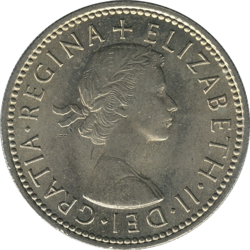
The "heads" side of a coin — conventionally the side bearing the principal portrait or national emblem. On most US coinage, the obverse shows a president or Liberty figure. On UK coinage, the reigning monarch.
The "tails" side — usually showing the denomination or a secondary symbol. The Walking Liberty Half's eagle reverse, the Mercury Dime's fasces, the Voyageur dollar's canoe scene, the Caballito peso's eagle-on-cactus.
The third "side" of a coin. Edges are categorized as plain (smooth), reeded (parallel grooves), or lettered (incised text or design). Reeding was originally an anti-clipping measure for precious-metal coins — if you shaved silver off the edge of a smooth coin, no one noticed; if you shaved a reeded edge, the missing reeding gave you away.
Modern post-1965 US clad coins still have reeding for tradition, even though there's no precious metal to clip.
The series of vertical grooves on the edge of most silver and gold circulating coinage. Counted as a per-coin specification: a 1964 Washington Quarter has 119 reeds; a Morgan Dollar has 189. Counterfeiters often get the reed count wrong — one of the verification checks for high-value coins.
The raised design elements on a coin — the portrait, eagle, lettering, etc. As distinct from the field (the flat background area). On Proof coins, devices are typically frosted while fields are mirror-finish; on circulation strikes, both are usually the same lustrous finish.
The flat blank area of a coin around and between the devices. The state of the field is critical to grading — bag marks, hairlines, and contact marks all show up in the field on otherwise uncirculated coins.
The blank metal disk fed into the coining press to be struck into a coin. Planchets are produced separately from the actual striking and have their own composition, weight, and edge specifications. Mints occasionally strike a coin design on the wrong-denomination or wrong-composition planchet — producing rare and valuable error coins.
The denomination printed or struck on a coin (the number that legally defines what it can be spent for). A 1964 silver dime has a 10¢ face value — even though its silver content is worth several dollars at modern prices. Junk-silver buyers and sellers quote prices in face-value units: "$10 face roll of dimes," "$100 face bag of quarters."
A small letter on a coin indicating which mint produced it. US mintmarks: P (Philadelphia — often omitted historically), D (Denver), S (San Francisco), CC (Carson City, 1870–1893), O (New Orleans, until 1909), W (West Point, modern bullion).
Position varies by series and era — on Mercury Dimes and Walking Liberty Halves, look on the reverse near the bottom; on Morgan Dollars, just below the wreath on the reverse.
The total number of coins struck for a particular date and mintmark. Published annually in mint reports and aggregated in references like the Red Book (US) or Spink (UK). Low-mintage years tend to become key dates; very-low-mintage years become legendary rarities.
A US mint in Carson City, Nevada, operating from 1870 to 1893 to convert Comstock Lode silver into coinage on-site. CC-mintmark coins (especially Morgan Dollars) carry strong premiums for their historical association — many were preserved in Treasury vaults and released in original Mint bags through the 20th-century GSA Hoard sales.
An annual collection of one circulation-strike example of each US denomination from each operating mint, sold by the US Mint to collectors. Distinct from Proof sets, which contain specially-struck Proof coins. The 1964 Mint Set is the last to contain 90% silver dimes, quarters, and halves.
A coin made from original dies after the original mintage year — often years or decades later, sometimes by a successor government. Mexican gold pesos (1947 and 50-peso "Centenarios") and Austrian thalers (1780 Maria Theresa thaler restrikes) are two famous examples, where the same date appears on coins struck across many later years for bullion or trade purposes.
A coin struck with mismatched dies — an obverse from one denomination paired with a reverse from another, or two coins from different countries. Almost always errors and almost always rare. The 1959 Lincoln Cent / Wheat Reverse mule (which would have been wheat reverse two years after the design switched to memorial reverse) is among the most-debated US coin rarities.
The current market price for one troy ounce of pure precious metal in unrefined-or-bullion form, quoted continuously during trading hours by the LBMA (London) and COMEX (New York). The "spot" refers to immediate delivery, as distinct from futures or forward contracts.
All bullion trades are priced as "spot + premium" or "spot - discount" depending on form (round, bar, coin) and condition.
The value of a coin's metal content alone, calculated as weight × fineness × spot price ÷ 31.1035. Sets the floor on what a coin should be worth: a 1964 silver dime can never trade below its melt value (the silver content alone) for long, because someone would simply melt it.
Numismatic premiums sit on top of melt value and reflect rarity, condition, and demand.
The portion of a coin's market price above its melt value, reflecting rarity, condition, historical significance, or collector demand. A common-date 1964 dime trades at near-melt; a 1916-D Mercury Dime in Mint State trades at a four-figure numismatic premium over the silver content.
The difference between what a dealer pays for a coin (bid) and what they sell it for (ask). On bullion, spreads are tight (1–5% over spot for common silver coinage, 2–8% for gold). On numismatic coins, spreads can be much wider, reflecting illiquidity and grading subjectivity.
A distinguishable die-level difference within a single date and mintmark — a doubled die, a missing serif, an extra leaf, repunched mintmark, etc. Some varieties carry significant numismatic premiums (1955 Doubled-Die Lincoln Cent, 2004 Wisconsin "Extra Leaf" State Quarter); most are minor footnotes for specialists.
An error in which a coin die was hubbed twice with slight misalignment, producing visible doubling on parts of the design (often the date or lettering). Famous examples: 1955 Lincoln Cent, 1972 Lincoln Cent, 1937-D Mercury Dime "Doubled Die Obverse". Doubled dies are real Mint errors, distinct from worn or struck-through coins.
Encapsulated in a sealed, tamper-evident plastic holder ("slab") by a third-party grading service like PCGS or NGC. The slab includes a serial number, the assigned grade, and any special designation (FB, FBL, CAC, etc.). Slabbed coins trade with a clear grade reference; raw (un-slabbed) coins trade based on photographs and dealer assertions.
An ungraded, un-encapsulated coin sold loose or in a paper or plastic flip. Raw coins are common at coin shows, flea markets, and estate sales — cheaper than slabbed equivalents but with all the risk of unverified grading. Most junk silver is sold raw.
Founded 1986. The largest US grading service by volume and the de facto premium-tier brand for high-value US coins. PCGS slabs typically command the strongest prices of any service. Their True View imaging service produces high-resolution photos of submitted coins.
Founded 1987. The second-largest US grading service. Widely accepted at major auction houses. Some collectors note NGC as marginally more generous on borderline grades than PCGS, though both target the same standards. NGC-slabbed coins typically trade at small discounts to equivalent PCGS slabs.
The oldest US grading service (founded 1972, originally as a non-profit arm of the American Numismatic Association). More affordable than PCGS or NGC and widely accepted at coin shows, but ANACS slabs typically carry less premium than the top two services.
Not a grader. CAC reviews already-slabbed PCGS or NGC coins and applies a green sticker (or rare gold sticker) to those it considers premium examples for the assigned grade. CAC-stickered coins trade at meaningful premiums to non-stickered same-grade coins. Run by John Albanese, who co-founded NGC.
A budget-tier grading service. Used for moderate-value coins where the cost of PCGS or NGC grading exceeds the marginal premium. Less brand recognition; ICG slabs trade at discounts to PCGS/NGC equivalents.
The density of a substance relative to water (water = 1.000). Pure silver = 10.49, 90% silver coin alloy = ~10.34, sterling = ~10.36, pure gold = 19.32. Specific gravity tests use a scale and a beaker to weigh a coin in air and submerged, and the ratio identifies the metal.
Cannot be faked easily because density is determined by atomic structure — tungsten (19.25) is the only common metal close enough to gold to fool a basic SG test, hence the importance of multi-test authentication.
Hold a strong neodymium magnet near or against the coin. Real silver and gold are not magnetic. If the coin sticks or even subtly resists, it's not pure silver or gold — it likely contains iron or steel (counterfeit) or significant nickel content (cupronickel modern coinage).
Useful as a first-pass screen but not definitive: a non-magnetic counterfeit could still be brass, lead, tungsten, or other dense non-magnetic metal.
Real silver coins, balanced on a fingertip and gently struck with a pencil or another coin, produce a long, clear, high-pitched ringing tone — the "silver ring." Counterfeit or base-metal coins produce a duller thud or a short tinny clink. There are smartphone apps that compare the recorded tone to known-good silver references.
Best for round-shape coins; reeded edges add complications. A confirmation test, not a primary one.
A small, high-magnification handheld lens (typically 10x) used to inspect coins for wear, mintmarks, doubled dies, scratches, and counterfeit indicators like cast seams or tooling marks. Standard loupe magnification for coin work is 10x; jeweler's loupes also work fine.
Silver Without a State — 17th–19th c. Asian silver economy
How a major commercial economy ran a working silver monetary system for 250 years with no state-issued silver currency. Terms used across the five-essay arc — see the arc landing page.
8 reales — Spanish silver dollar / "piece of eight"
The Spanish silver dollar: a ~27 g silver coin (~0.78 troy oz of pure silver) minted in Spain's American colonies, especially Mexico and Peru, from the 16th century through the early 19th century. The world's first global currency.
The 8 reales circulated from Manila to Madrid to Massachusetts. The US Continental Congress used it as the basis for the American silver dollar. The Chinese word yuan and the Japanese yen both literally mean "round" — both currencies were modeled on the round Spanish dollar.
A deeply chiseled gouge punched into a silver coin to disqualify it from continued use as a coin. Cancellation marks force the coin to be treated as bullion (silver by weight) only, distinct from the smaller verification chopmarks applied during routine assay.
The Bengal sultanate (c. 1300–1500) provides the cleanest documented examples: numismatists have identified three categories of mark on surviving tankas, with cancellation marks unambiguously distinct from test marks and identification marks.
The Mexican peso design that succeeded the Spanish Carolus dollar after Mexican independence (1823 onward). Equivalent silver content (~27.07 g, .903 fine) but Chinese merchants paid a smaller premium for it.
Cap and Rays was the second-most-traded silver coin in 19th-century China. Despite equivalent metal content to the Carolus, Chinese fiduciary preference favored the older coin design — Cap and Rays traded at around a 5% premium over silver content vs. the Carolus's 14%. The design featured a Phrygian cap of liberty surrounded by sun rays, replacing the Spanish royal portrait.
A trough-shaped sycee variant — one of several named regional silver-bullion shapes catalogued by numismatists working on the Qing-era Chinese silver economy. Documented alongside yuanding ("round-trough") and other regional forms.
Spanish 8 reales silver coins minted in colonial Mexico under Kings Charles III (Carolus III, reigned 1759–1788) and Charles IV (Carolus IV, reigned 1788–1808), featuring the king's portrait. The most desirable foreign silver coin in 19th-century Chinese commerce.
The Carolus dollar was so important to 19th-century Chinese commerce that it traded at substantial premiums over its silver content — 14% premium in 1877 Shanghai, and as much as 50% premium in 1856. Striking because the coins were no longer being minted (Spain ceased production in 1810). The premium was entirely fiduciary: Chinese merchants in Jiangnan had collectively decided this was the reference coin, and the preference persisted for decades. The Roman numeral "IIII" in CAROLVS IIII looked like the Chinese character gong (work) to Chinese eyes, leading to the local nickname "Four Work."
A small private punch-stamp struck into a silver coin by a merchant or professional money-changer to certify that they had personally tested the coin and found it to be good silver of acceptable weight. The act of striking the coin is the test — solid silver bends and dents in characteristic ways that copper-cored counterfeits don't replicate.
Chopmarks vary widely: Chinese characters, geometric symbols, abstract monograms, deep punches, shallow test cuts. The system was deliberately decentralized — no guild registering marks, no government licensing chops. Out of countless thousands of distinct chops on surviving coins, exactly one (Tait & Co.) has been tied to its issuer. The mark was the visible record of an act of physical testing, not a signature meant for distant strangers to recognize.
The traditional Chinese silver-weighing scale, used at point of sale to determine how many taels of silver a foreign coin or sycee ingot represented. Essential equipment in any Chinese commercial transaction involving silver — prices were quoted in taels and silver objects varied in weight.
The southern Chinese province around Canton (Guangzhou). In the 19th-century silver economy, Guangdong ran a commodity-money regime where silver coins traded purely by weight regardless of issuer or design. Heavy chopping was neutral to value — the coin's silver content remained the silver content.
Contrast with Jiangnan, which ran a fiduciary regime where the Carolus dollar traded at a premium over its bullion content. The two regimes coexisted across the same imperial currency without conflict — a working historical example of polycentric monetary order.
The lower-Yangtze region around Shanghai. In the 19th-century silver economy, Jiangnan ran a fiduciary monetary regime where the Carolus dollar traded at premiums above its silver content. Heavy chopping demoted a coin out of the premium pool — though the underlying silver retained its bullion value.
The regional split between Jiangnan and Guangdong is the structural fact most modern accounts of Chinese silver get wrong. The two regimes coexisted across the same empire, handling different parts of the silver-economy problem.
The Treasury (kuping) tael standard — one of several competing tael weights used across imperial China. Different cities had different tael standards: the Shanghai tael, Tientsin tael, Canton tael, and kuping tael all had slightly different weights, and converting between them was part of any inter-city silver transaction.
The earliest documented chopmarks, applied by Chinese merchants operating in Spanish Manila c. 1572 onward. Strong circumstantial evidence that the Chinese chopmark tradition originated through the Manila Galleon trade — Chinese merchants in Manila were already chopping Spanish silver before the practice spread to mainland Chinese ports.
The annual Spanish trade ship — and by extension, the entire trade route — that carried silver from Mexico to China via Manila from 1565 to 1815. For 250 years, roughly 50 to 75 metric tons of silver per year crossed the Pacific on this single route (on the order of 20,000–30,000 tons in total), making it among the most consequential trade routes in human history.
The galleon trade reshaped the global money system: Spanish 8 reales became the dominant silver coin in Asian commerce; Chinese demand for silver (driven by silver-denominated taxes) was the demand-side engine; Mexican silver mines were the supply-side engine. The trade ended in 1815 with Mexican independence; by then the global silver-trade infrastructure it created was permanent.
A regional sycee form used in Yunnan province, shaped like a packsaddle. One of several provincial sycee variants documented in Joe Cribb's A Catalogue of Sycee in the British Museum (1992) — the definitive English-language reference, cataloguing 1,300 genuine sycee plus 54 fakes by shape and provincial origin.
A professional money-tester or money-changer in 17th–19th century Asia, especially China and India, who specialized in assaying foreign silver coins by weight, sound, hardness, and metal composition.
The word comes from the Arabic sarraf, meaning money-changer. The role spread along Indian Ocean trade routes; English-speaking merchants in the China trade adopted the term and it became standard 19th-century English for the Chinese profession that did this work. A shroff was typically employed by a major trading house or bank and processed thousands of coins per day. The chopmarks they applied to verified coins were both their professional signature and their bill of work performed.
Boat-shaped Chinese silver bullion ingots (also called yuanbao), used as the standard form of bullion silver in Chinese commerce for large transactions. Sycee were typically valued by weight in taels and varied from small fractional pieces to ingots of 50+ taels.
Sycee were the form silver took when it was acting as bullion rather than coinage. Most foreign silver coins that entered China were eventually melted into sycee — including hundreds of millions of Spanish 8 reales and tens of millions of US Trade Dollars. The shape (boat or shoe) was traditional and made stacking efficient. The word "sycee" comes from Chinese 細絲 meaning "fine silk" (Mandarin xisi; the English spelling reflects the Cantonese pronunciation sai-si) — a reference to the silk-like ripple patterns (xisi) on cooling high-purity silver.
A traditional Chinese unit of weight for silver, approximately 38 grams (varied by city and era). The fundamental unit of account for large transactions in China's silver economy.
Tael was both a weight and a unit of money — the same word denoted the physical mass of silver and its value in commerce. Different Chinese cities had different tael standards: the Shanghai tael, Tientsin tael, Canton tael, and kuping tael all had slightly different weights. The word "tael" comes from Malay/Portuguese tahil. The dotchin scale physically determined the conversion. The tael persisted as a unit until the Republic of China reformed the silver currency in the early 20th century.
The reign of the Ming Wanli Emperor. The Chinese chopmark tradition is documented to have begun in this era — driven by the influx of Spanish silver via Manila — making the late Wanli era the founding moment of the Chinese silver-verification system that would run for the next 250 years.
The silk-like surface ripple pattern visible on cooling high-purity silver. Chinese silversmiths and merchants used it as a visual purity indicator on sycee ingots — gave the form its name (xisi = "fine silk").
Whether xisi is a reliable metallurgical phenomenon (silver crystallization producing measurable surface differences by purity) or primarily a folk metric is an open question for modern materials science to settle. Joe Cribb and others documented it as the working purity test in the Qing-era silver economy.
The Chinese name for sycee — boat-shaped silver bullion ingots ("yuan" = round, "bao" = treasure). Persists in modern Chinese culture as a symbol of wealth and prosperity, especially during Chinese New Year, and the form lives on in dumpling shape and decorative motif.
A round-trough sycee variant — another of the named regional silver-bullion forms used across the Chinese-trade silver economy, paired with the trough-shaped caoding in regional catalogues.
A snail-shaped sycee variant used in southern Yunnan and by Shan tribes in northern Thailand. Shows cross-border silver-form continuity in the pre-modern silver-trade zone — a reminder that the "Chinese" silver economy spilled into adjacent regions wherever silver moved as bullion.
Missing a term? Have a correction or a glossary entry to suggest? See About for contact info. This glossary lives at /glossary/ and links from coin-page footers across the site.