Silver Content Reference — United Kingdom
| Coin | Years | Total wt | Composition | Silver (ozt) | ≈ Fraction | Face |
|---|---|---|---|---|---|---|
| 92.5% sterling silver — Circulating, 1816–1919 | ||||||
Threepence (sterling) |
1816–1919 | 1.41 g | 92.5% Ag · 7.5% Cu | 0.0421 | ~1/24 oz | 3d |
Sixpence (sterling)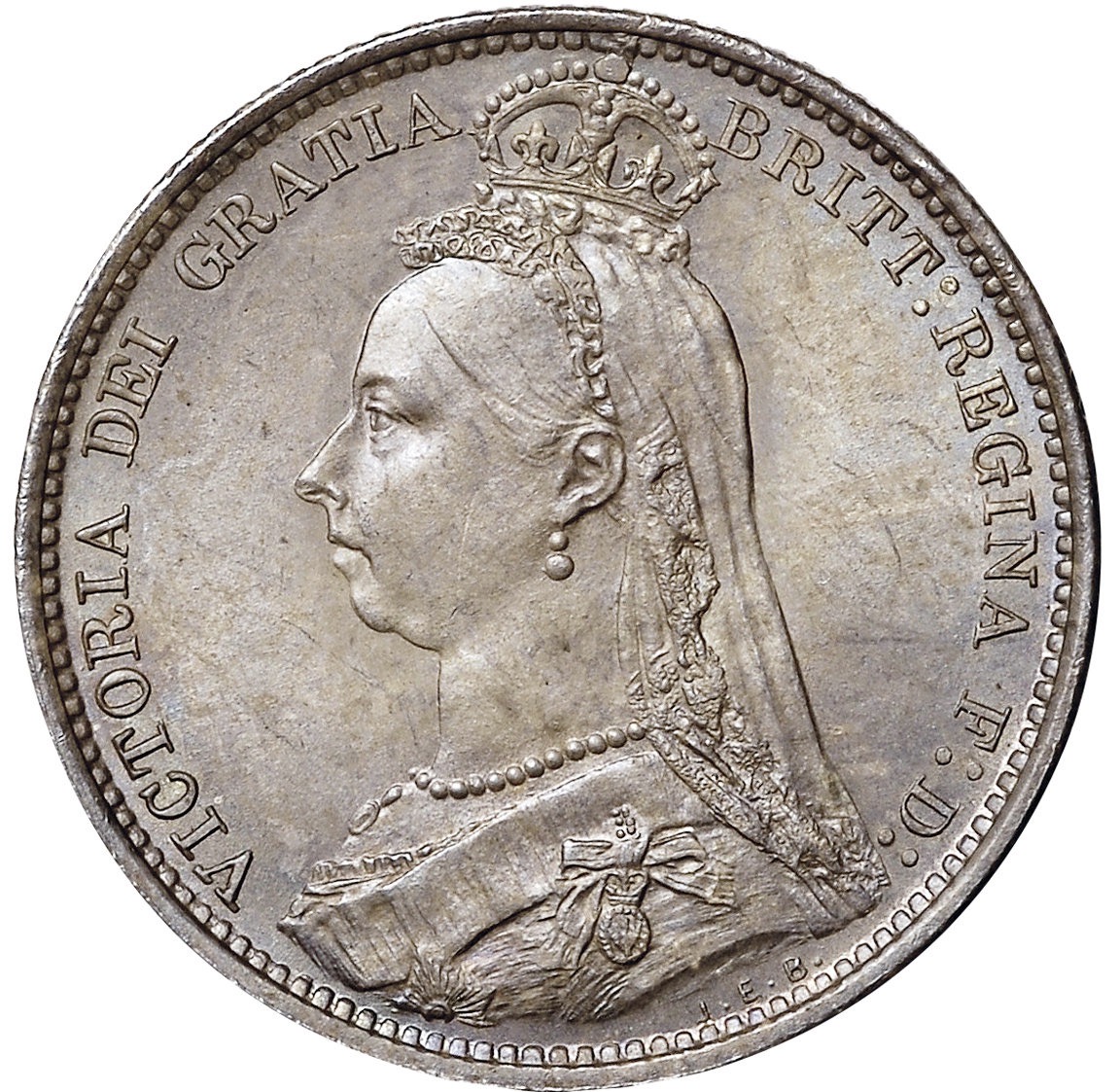 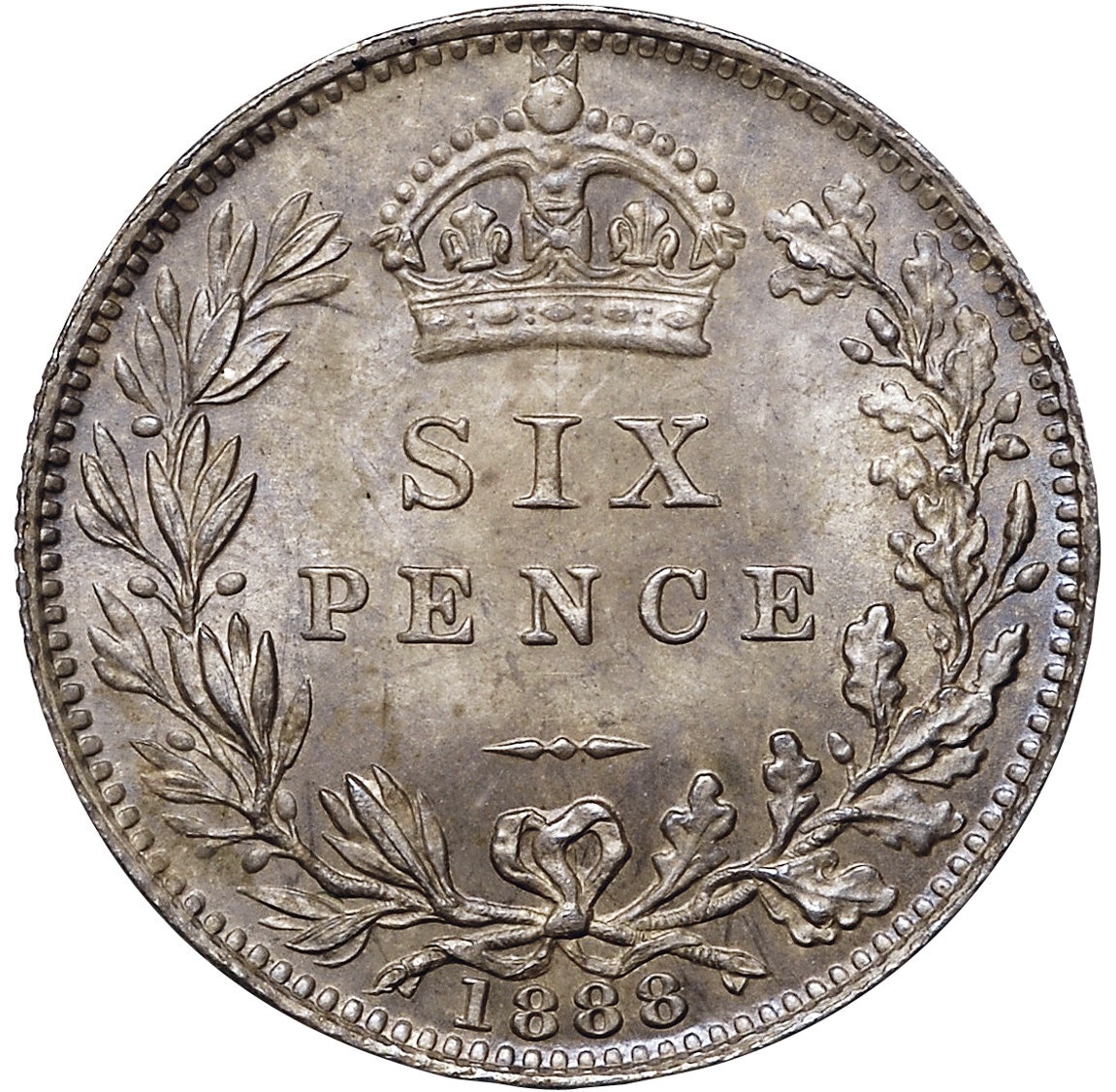 |
1816–1919 | 2.83 g | 92.5% Ag · 7.5% Cu | 0.0842 | ~1/12 oz | 6d |
Shilling (sterling)  |
1816–1919 | 5.66 g | 92.5% Ag · 7.5% Cu | 0.1683 | ~1/6 oz | 1s (12d) |
Florin (sterling) |
1849–1919 | 11.31 g | 92.5% Ag · 7.5% Cu | 0.3364 | ~1/3 oz | 2s (24d) |
Half Crown (sterling) |
1816–1919 | 14.14 g | 92.5% Ag · 7.5% Cu | 0.4205 | ~5/12 oz | 2s 6d (30d) |
Crown (sterling)  |
1816–1919 (mostly commem.) | 28.28 g | 92.5% Ag · 7.5% Cu | 0.8409 | ~5/6 oz | 5s (60d) |
| 92.5% sterling — Special & commemorative | ||||||
Double Florin  |
1887–1890 | 22.62 g | 92.5% Ag · 7.5% Cu | 0.6727 | ~2/3 oz | 4s (48d) |
| 50% silver — Reduced fineness, 1920–1946 | ||||||
Threepence (50%) |
1920–1944 | 1.41 g | 50% Ag · 40% Cu · 10% Ni | 0.0227 | ~1/44 oz | 3d |
Sixpence (50%) |
1920–1946 | 2.83 g | 50% Ag · 40% Cu · 10% Ni | 0.0455 | ~1/22 oz | 6d |
Shilling (50%) |
1920–1946 | 5.66 g | 50% Ag · 40% Cu · 10% Ni | 0.0910 | ~1/11 oz | 1s |
Florin (50%) |
1920–1946 | 11.31 g | 50% Ag · 40% Cu · 10% Ni | 0.1818 | ~2/11 oz | 2s |
Half Crown (50%)  |
1920–1946 | 14.14 g | 50% Ag · 40% Cu · 10% Ni | 0.2273 | ~2/9 oz | 2s 6d |
| Trade silver — Far East colonial commerce | ||||||
British Trade Dollar |
1895–1935 | 26.96 g | 90% Ag · 10% Cu | 0.7800 | ~4/5 oz | $1 trade |
| Maundy money — Royal ceremonial set, 92.5% sterling, continuous | ||||||
| Maundy Penny | continuous | 0.47 g | 92.5% Ag · 7.5% Cu | 0.0140 | ~1/71 oz | 1d |
| Maundy Twopence | continuous | 0.94 g | 92.5% Ag · 7.5% Cu | 0.0280 | ~1/36 oz | 2d |
| Maundy Threepence | continuous | 1.41 g | 92.5% Ag · 7.5% Cu | 0.0421 | ~1/24 oz | 3d |
| Maundy Fourpence | continuous | 1.89 g | 92.5% Ag · 7.5% Cu | 0.0561 | ~1/18 oz | 4d |
How to use this card: at the coin shop or estate sale, multiply the count of each coin by the "Silver (ozt)" column, sum, then multiply by the day's silver spot price. Treat numismatic premium (rarity, condition, key dates) as a separate question — this card prices the metal only. Click any coin photo to see it at full Wikimedia resolution.
Why 1816? The Great Recoinage of 1816 fixed the shilling weight at 5.6552g of sterling silver — the system every later denomination derives from. Earlier hammered and milled silver coinage exists from Saxon and Tudor periods but uses different weight standards; covered in a future expansion.
Why 1947? Post-war pressure on Britain's silver reserves (most owed to the United States under Lend-Lease) led to the Coinage Act 1946, which removed silver from circulating UK coinage entirely. The shilling, sixpence, and the rest continued in circulation as cupronickel until decimalization in 1971.
A note on the 50% alloy: the table shows "50% Ag · 40% Cu · 10% Ni" as a typical 1920–1946 formulation, but the base-metal recipe actually varied: 1920–1922 was 50% Ag / 50% Cu (which tarnished badly), 1922–1927 was the 50/40/10 Ag/Cu/Ni shown here, and 1927–1946 was 50% Ag / 40% Cu / 5% Ni / 5% Zn. The silver content (50%) is constant across the era — only the base-metal alloy changed.
Britannia bullion (1997–present): the modern Royal Mint Britannia is a separate beast — 1 troy ounce of .999 fine silver, sold as bullion at spot + premium. Not on this card; it's a 21st-century investment product, not circulated currency.
Coin photos via Wikimedia Commons. Public domain (Royal Mint historical) and CC-licensed contributor uploads. Click thumbnails to view sources and licenses.
Data sources: Royal Mint specifications · Coinage Acts of 1816, 1920, and 1946 · Spink Coins of England and the United Kingdom. Conversions mirrored across this site.