Six Men on a Train to Jekyll Island. You've Been Paying the Bill Ever Since.
In November 1910, six men representing a quarter of the world's wealth boarded a private railcar in New Jersey. What they designed in secret over nine days became the Federal Reserve — the institution that would quietly reshape what a dollar means.
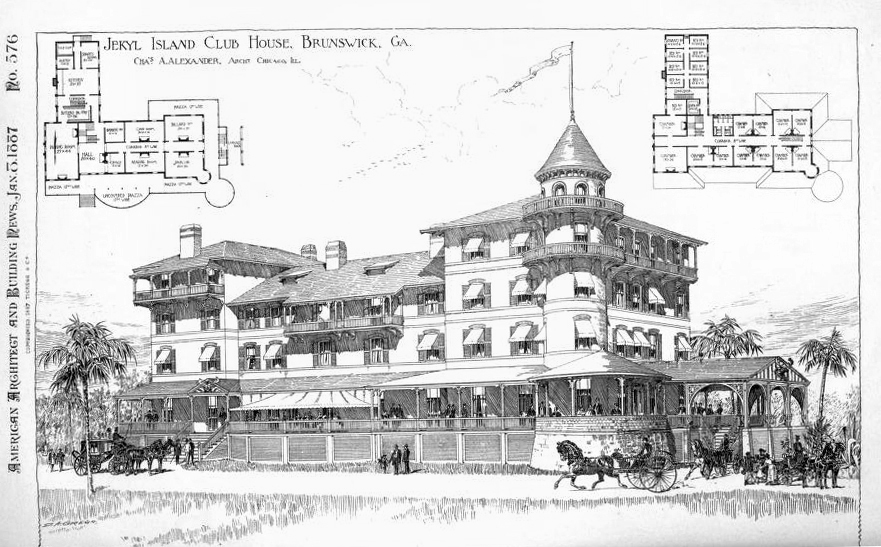
On a cold evening in November 1910, six men boarded a private railcar at a station in Hoboken, New Jersey. They used first names only — a precaution, though they told anyone who asked they were heading to Georgia for duck hunting. No formal records of the gathering were kept. No names were listed in passenger manifests. No official minutes were recorded.
What these men were actually doing was designing the Federal Reserve. Over nine days on a private island called Jekyll Island, off the coast of Georgia, they drafted the blueprint for what would become the most powerful financial institution in the world. The system they created in secret has spent the last 113 years reshaping what your dollar is worth.
This isn't a conspiracy theory. The men's identities were published decades later. The details of their meeting were documented in interviews, memoirs, and congressional testimony. And yet almost nobody knows about it. Which is interesting in itself.
Who was on the train
The six passengers represented roughly 25% of the world's wealth at the time. Start with the names you might recognize:
Nelson Aldrich was the chairman of the National Monetary Commission and one of the most powerful Republican senators in Washington. He was also Rockefeller's father-in-law, which tells you something about who gets a seat at tables like this.
Frank Vanderlip was president of National City Bank, which would eventually become Citibank. Henry Davison was the right hand of J.P. Morgan — then the closest thing America had to a central bank in a single man. A. Piatt Andrew was the Assistant Secretary of the Treasury, a key government liaison who could advise on policy. Arthur Shelton was Nelson Aldrich's private secretary, brought along to handle the logistics and keep the detailed records. These were the architects of American finance.
Then there was Paul Warburg, who may have been the most important of the six, and certainly the most relevant to this moment in history. Warburg was German-born, an expert in central banking who had studied the systems of Europe. He worked for Kuhn Loeb, one of the country's most influential private banks. He wasn't American-made money. He was the technician — the one who knew how central banks actually worked because he'd seen them up close in Germany and elsewhere.
On the surface, these were powerful men with different interests from different institutions. But they shared something more important: they all stood to benefit from a unified system that could expand the money supply, coordinate lending, and prevent the kind of bank panics that periodically wiped out fortunes. They didn't gather on Jekyll Island to harm the country. They gathered because they wanted something, and the current system wasn't giving it to them.
What they came to design
America had rejected two central banks already. The First Bank of the United States (1791–1811) and the Second Bank of the United States (1816–1836) were both shut down by politicians who understood that a private banking monopoly with government sanction was antithetical to democratic control. By 1910, the country was on what was supposed to be the final attempt at a decentralized banking system. And it wasn't working well, at least from the perspective of large New York banks.
The banking panic of 1907 had been a near-catastrophe for the financial system. Runs on banks, failures cascading through the system, and only J.P. Morgan himself personally stepping in to loan money and restore confidence had prevented total collapse. This was embarrassing and dangerous. The big banks wanted a solution.
But here was the political problem: Americans didn't want a central bank. The very phrase carried the stink of aristocracy, foreign control, and corporate monopoly. Twice America had rejected the idea explicitly. So on Jekyll Island, the six men made a deliberate choice about language.
They wouldn't call it a central bank. They would call it the Federal Reserve System — a name chosen because "Federal" sounds governmental (it isn't), and "Reserve" sounds safe and conservative (it isn't). The underlying structure was a central bank in everything but name. It would be controlled by private bankers, owned by private banks, and operated for the benefit of the banking system. But it would be dressed in the language of government service and public safety.
What would this institution do? Three things, primarily:
First, it would create an elastic money supply. Instead of gold alone determining how much money existed in the economy, the Federal Reserve could create currency based on demand. This solved the problem that had plagued bankers for decades: when business boomed, there wasn't enough currency to grease the wheels. When hard times came, the money supply shrank, making everything worse. The Fed could turn the spigot up or down.
Second, it would serve as a lender of last resort. When a bank got into trouble, instead of failing, it could borrow from the Federal Reserve at the discount window. This prevented panics from spreading. It also meant that banks could take bigger risks — if things went wrong, the Fed would bail them out. (This feature would prove popular.)
Third, and most important over the long term, it would enable fractional reserve banking on a system-wide scale. A private bank can only lend out a fraction of the deposits it holds, because depositors expect to be able to withdraw their money. But if all banks lend simultaneously, and the Federal Reserve is standing ready with newly created money to paper over the gaps, the entire banking system can expand credit far beyond what physical reserves would normally allow. The bankers had designed a machine for making money from thin air. All they needed was the permission of the government and the public.
They didn't call it a central bank. They called it a "Federal Reserve." Federal, for the government veneer. Reserve, for the false sense of safety.
The plan that emerged from Jekyll Island was brilliant in its construction and audacious in its scope. It would concentrate financial power while appearing to distribute it. It would benefit bankers while claiming to protect the public. It would expand the money supply without any gold standard to constrain it, without any democratic oversight, and without any transparency about who actually controlled the decisions.

How it passed Congress
The Jekyll Island plan, initially called the Aldrich Plan after its Senate sponsor Nelson Aldrich, faced political obstacles. Politicians understood what was happening, even if the public didn't. A central bank of any name was a dangerous concentration of power.
So the plan sat, drafted but unsold. Then, in 1912, the political landscape shifted. Woodrow Wilson won the presidential election on a reform platform — he was going to break up the trusts, decentralize banking, and return power to the people. It was the perfect moment to push the Jekyll Island design.
Congressman Carter Glass and Senator Robert Owen took the Aldrich Plan's core architecture and repackaged it. They changed the name to the Federal Reserve Act, added a presidentially appointed Board of Governors to make it look more governmental, and sold it to Congress as a reform that would decentralize banking power — the opposite of what it actually did.
Congress voted on the Federal Reserve Act on December 23, 1913. The timing was notable. The Senate voted 43–25 on December 23, two days before Christmas. The bill had been debated for months, but the final vote came during the holiday session when some members had already left. Woodrow Wilson signed it into law the same day.
America had rejected central banking twice explicitly. On December 23, 1913, it got one anyway — repackaged under a new name, with a governmental veneer layered over a system designed by and for private bankers.

The cost of the system
The Federal Reserve began operations in 1914. At that time, one ounce of gold cost $20.67.
Today, gold costs approximately $4,600 per ounce.
Measured in gold, that's a 99.55% decline in the dollar's purchasing power.
To put this concretely: a dollar bill in your pocket today is worth less than a penny in 1913 gold-denominated purchasing power. Every dollar you save is slowly being emptied from the inside.

This wasn't an accident. It was the design. The Fed's charter explicitly authorized it to expand the money supply without any constraint. Gold was the original constraint — you can't print more currency than you have gold to back it with. But the Fed was explicitly freed from that discipline. It could print as much as it wanted. It did.
The table below shows the dollar's decline at key intervals. Each row shows a year, the major monetary event of that year or era, the price of gold, and what $1 from 1913 is worth in purchasing power:
| Year | Event | Gold $/oz | $1 (1913) = ? |
|---|---|---|---|
| 1913 | Fed Created | $20.67 | $1.00 |
| 1934 | Gold Revalued | $35.00 | $0.59 |
| 1971 | Gold Window Closed | $35.00* | $0.59* |
| 1975 | Gold Floats Free | $161 | $0.13 |
| 1980 | Peak Inflation | $850 | $0.024 |
| 2000 | Gold Trough | $273 | $0.076 |
| 2026 | Today | ~$4,600 | ~$0.0045 |
* Official government price. Gold was fixed at $35/oz from 1934–1971; free-market prices were higher by the late 1960s. Once gold traded freely, the dollar’s real decline became visible.
The progression is remorseless. And it isn't because gold became "more expensive." Gold doesn't do anything. An ounce of gold in 1913 is chemically identical to an ounce of gold today. What changed is the dollar.
The promise that failed
The Federal Reserve was designed to prevent bank panics. The men on the train to Jekyll Island were running from the panic of 1907, and they promised that a system of coordinated banking under Fed supervision would prevent such chaos from happening again.

We got the Fed. We also got bank panics anyway. The Great Depression (1929). The savings and loan crisis (1980s). The dot-com crash (2000). The financial crisis (2008). The pandemic bank runs (2023). The system failed at the one thing it was designed to do.
But what it succeeded at, spectacularly, was concentrating financial power and benefits. The Fed bails out banks when they fail. The Fed creates trillions of dollars when Wall Street gets in trouble. The Fed buys assets and inflates prices. The Fed's policies benefit those who own assets (the rich) and hurt those who hold cash (everyone else).
The cost of this system — the cost of a central bank designed by bankers, for bankers, operating in secret and sold to the public with a false name — is paid by everyone else. You pay it every time you buy groceries and notice they cost more than last year. You pay it every time you try to save money and the interest rate on savings is negative in real terms. You pay it every time wages don't keep up with inflation. You pay it every time a young person decides homeownership is impossible.
The six men on the train to Jekyll Island solved their problem. They created a system that would never let them fail. What they also did was transfer the risk of the entire financial system from the banking industry to the general public. When banks took big risks, the Fed would bail them out. When the economy needed stimulus, it would be paid for by destroying the value of everyone else's savings.
The domino that started it all
This is the second series from The Great Remember — a collection of essays tracing the history of sound money and how it was dismantled. The six men on the train to Jekyll Island knocked over the first domino. What followed was a cascade:
Once the Federal Reserve existed, the government could expand credit without limit. Once credit was unlimited, gold had to be discarded as a constraint. Once gold was no longer a constraint, the dollar was free to inflate. Once inflation became possible, debt became advantageous. Once debt was advantageous, the government borrowed and borrowed. Once the government was in debt, it had to keep the currency inflated to reduce the real value of that debt.
Each domino fell into the next. Each step seemed small at the time. Each was justified as necessary. But the chain led from the Jekyll Island meeting in 1910 to a system where the dollar has lost 99.55% of its value, where savers are punished and borrowers are rewarded, where the people who designed the system have become richer and more powerful than ever, while everyone else watches their purchasing power drain away year after year.
The next essay in this series traces what happened when the government made it illegal to own gold. See all essays here →
Sources
- The Creature from Jekyll Island — G. Edward Griffin, comprehensive history of the Federal Reserve's founding and the Jekyll Island meeting.
- Federal Reserve Act of 1913 — Full text of the original legislation, Federal Reserve Economic Data (FRED).
- FRED — Federal Reserve Economic Data, CPI historical data and gold price history.
- The Case Against the Fed — Murray Rothbard, economic critique of central banking.
- The House of Morgan: An American Banking Dynasty — Ron Chernow, on the Morgans and the power brokers of Wall Street.